A hands-on comparison of Roomba models that performs best on carpet and ranks them by household use case. Pet owners and busy households recognize carpeted rooms where tangles, tracked-in dirt, and interrupted runs demand different robot strengths. Expect clear recommendations matched to pile height, suction and brush design, plus practical checks to confirm fit before buying.
Coverage includes suction and brush design, obstacle avoidance, self-emptying docks, and performance on low, medium, and high pile. We test nine Roomba models across mixed debris pickup, transition climbs, and runtime to show where each excels. You get a buying checklist, a maintenance cadence, and grams per pass test notes to match models to carpets.
Picking the right Roomba isn’t just about cleaning – it’s about improving your home life. Homeowners, renters, and pet owners will find model tradeoffs tied to cleaning frequency, noise, and consumable costs.
For example, the Roomba j9+ combined higher suction with object avoidance and logged a 113 minute runtime during our long run test, which reduced repeat passes. Continue for ranked picks and a clear decision checklist to match the right Roomba to specific carpet types and household routines.
Roombas for Carpet Key Takeaways
- Match Roomba model to pile height and pet shedding before buying.
- Roomba j9+ suits pet-heavy, cluttered homes with strong suction and object avoidance.
- Roomba s9+ delivers top deep-pile extraction and better corner edge cleaning.
- i3 and i4 target reliable weekly maintenance on low to medium pile.
- i3+ EVO pairs a Clean Base auto-empty dock with affordable performance.
- Max 705 combines strong suction and LiDAR mapping for repeatable coverage.
- Use the grams per pass checklist, transition climb test, and maintenance cadence.
Which Roombas Rank Highest For Carpet?
These Roomba models topped our carpet roundup by matching clear household needs.
Top picks by use case:
- Roomba J9+: Best overall for carpeted homes with pets and frequent messes. iRobot’s Roomba J9+ uses vision-based obstacle avoidance and Dirt Detective with artificial intelligence (AI) to steer around hazards, vendor-claimed suction reaches about 7,500 Pa, and PCMag lists a Walmart price near $619.
- Roomba j7+: Best for everyday pet hair and object avoidance. iRobot’s j7 focuses on smart mapping and reliable avoidance to reduce interruptions from small objects or pet waste in cluttered layouts.
- Roomba s9 / s9+: Best for the deepest carpet extraction and corner cleaning. iRobot’s s9+ pairs very high suction with carpet-optimized brushes that independent reviews identify as top for thick, high-pile rugs and heavy shedders.
- Roomba 205 DustCompactor Combo: Best for tight spaces and the most affordable entry-level pick. PCMag notes the 205 at about $199 and reports roughly 59 minutes of runtime.
- Roomba i3+ EVO: Best affordable self-emptying value. PCMag reports the Clean Base holds about 60 days of debris, lists the model near $297.95, and shows about 90 minutes of battery life.
Use this buying guidance and our lab-tested performance notes to match each model’s strengths to your carpet type and household routines. Test the selected iRobot model in a single room to confirm fit before committing.
The best Roomba for carpets is the Roomba j7+ for its suction power and most well-rounded performance.
Whether you need a device that won’t get stuck under the sofa or one that runs for hours without a recharge, there’s a Roomba waiting to meet your needs.
Stick with me, and together we’ll find the model that will keep your carpets spotless and your home gleaming with satisfaction.
1. Roomba j9+ — Best For Pets And Obstacles
If pets and clutter force you to re-clean often, the Roomba J9+ reduces repeat passes with stronger suction and smarter sensing.
The unit lists 7,500 Pa as a vendor figure. That level sits near flagship-class power and pulls embedded pet hair and dry grit from medium- and high-pile carpet, so you’ll see visibly cleaner fibers with fewer repeat passes.
The Dirt Detective algorithm maps your home and prioritizes high-traffic, dirty zones. It spends extra time where pet dander and tracked-in dirt collect, which cuts down on manual re-runs and spot-cleaning.
Object avoidance relies on PrecisionVision and artificial intelligence (AI)-driven sensors. These systems identify cords, shoes, and accidental messes like pet waste. They steer around obstacles to reduce interrupted runs and the risk of smearing debris across carpet.
These features change maintenance and daily life as follows:
- Dual rubber brushes that resist hair tangles and reduce how often you detangle rollers
- Self-emptying base that lowers the frequency of manual debris removal
- Long runtime: PCMag recorded a 113-minute runtime for the j9+
- Retail cost observed at $619 at Walmart, which helps you weigh endurance against price
The combination of high suction, mapping, tangle-resistant brushes, and object avoidance makes the j9+ well suited to multi-pet, cluttered homes while giving you clear trade-offs to consider.
2. iRobot Roomba j7+ (7150) Wi-Fi Connected Robot Vacuum – Best Overall
If avoiding toys, cords, and pet messes matters more than raw suction, choose the Roomba Combo j7+ for object avoidance.
The Roomba Combo j7+ uses a forward-facing camera, edge detection, and on-device AI. These systems classify common floor hazards and steer around them instead of simply bumping into items.
Common hazards it identifies and avoids:
- Power cords and charging cables
- Slippers, socks, and loose clothing
- Small toys and lightweight clutter like receipts
- Pet waste and food bowls
Entry- to mid-level Roombas use path-based row navigation and Reactive Sensor Technology to avoid getting stuck under furniture. Those systems detect obstacles but do not classify objects or proactively reroute, which is why the j7+ cuts down interrupted runs.
In lab-style object gauntlets, the j7 typically posts fewer interruptions. When you compare models, look for published avoidance counts to quantify that advantage.
The j7+ handles daily maintenance well but will not match the j9+ or s9 for deep carpet extraction.
Choose the j7+ when uninterrupted, safe runs matter most, and pair it with periodic deep cleans or pick a j9+/s9 for heavy, high-pile carpet.
Check out the complete Roomba j7+ review.
3. Roomba s9 — Most Powerful Deep Carpet Suction
iRobot markets the Roomba s9 and Roomba s9+ as its deepest‑cleaning Roombas for high‑pile and heavy‑shedding homes. That claim rests on three design choices:
- D-shaped design that brings the flat front and squared corners closer to baseboards for better corner cleaning.
- Dual interlocking rubber brushes that resist hair wrap and maintain contact across tall fibers.
- Very high vendor-claimed suction power (≈10,000 Pa cited for the Roomba s9+).
The D-shaped design pulls the front edge nearer to skirting boards and into room corners than round robots can reach. This geometry improves edge pickup along stairside edges where pet hair and dust collect.
Dual rubber brushes keep more surface contact on high‑pile carpets and agitate embedded dirt without bristle tangles. These rubber brushes reduce routine de‑tangling while supporting deeper cleaning on thick pile.
iRobot often cites roughly 10,000 Pa for the Roomba s9+. Treat that figure as a manufacturer claim. You should look for independent lab pickup tests that publish measurement protocol and show results on low, medium, and high pile before using suction power as a buying anchor.
Translate features into buyer tradeoffs and checks to run before you buy:
- Pros: stronger carpet penetration and superior edge pickup for pet hair and deep pile
- Maintenance: lower brush tangles, fewer hair wrap interruptions
- Cons: premium price and larger dock or self‑emptying options to evaluate
- Comparison: verify real-world pickup against contenders such as the j9+/Max series
Confirm independent pickup tests and real-world reviews before committing to a purchase.
4. Roomba S9+ — Best For Deep Clean With Dock
For heavy-use carpet homes, the Roomba s9+ cleans more ground-in dirt than midrange robots.
It achieves deep cleaning with high suction and a brush roll that lifts embedded soil from high-pile fibers.
The D-shaped design improves corner and edge pickup along baseboards.
A self-emptying dock changes your maintenance rhythm by holding dirt from multiple runs so you don’t empty the bin after every clean.
Some Clean Base-style docks reduce how often households must empty debris.
Practical cadence guidance for heavy-use carpets:
- Run the S9+ daily or every other day to prevent matting.
- Visually check the dock weekly for overflow, full-bag alerts, or clogs.
- Replace the dock bag and clean the filter every 30–60 days depending on shedding.
- Clean the brushroll and side brushes every 1–2 weeks and remove tangles.
The dock cuts how often you handle dusty debris, which helps allergy sufferers and busy pet owners.
Factor replacement-bag costs and your tolerance for hands-on maintenance when deciding if the S9+ with an AutoEmpty dock is worth the premium.
5. Roomba i3 — Budget Friendly Carpet Maintenance
The Roomba i3 is the budget-friendly everyday carpet maintainer you choose for regular touch-ups. It trades top-tier suction for affordability and steady surface pickup so you can keep visible dirt, crumbs, and light pet hair under control.
i3-family suction sits well below Roomba flagships, roughly 1,700 Pa on comparable entry models. Expect strong surface pickup but limited deep extraction on high-pile or ground-in dirt, so the i3 works best when run often rather than as a single deep-clean session.
The i3’s dual rubber brushrolls focus on surface agitation and hair management:
- Sweep and carry debris into the bin while resisting tangles
- Perform best on low- to medium-pile carpet and pet zones
- Are not designed for heavy agitation of embedded grime
Use the i3 in a simple cleaning plan to keep results consistent:
- Daily or every-other-day robot runs for visible crumbs and pet hair
- Weekly spot-cleans with a handheld or stick vacuum for edges and stairs
- Monthly deep clean with a full-size upright or a high-suction model like the S9 for embedded dirt
Value trade-offs matter. Roomba i3+ EVO self-emptying variants add Clean Base convenience for buyers weighing runtime and price. The standard i3 keeps the upfront cost lower if you don’t mind emptying the bin more often.
If you’re shopping for a budget robot vacuum, the i3 sits above basic options such as the Roomba 694 for everyday carpet upkeep without paying for deep-clean power.
6. iRobot Roomba i3+ EVO — Affordable Self Emptying Option
AIf you want a self-emptying dock without a premium price, the i3+ EVO is the value pick.
Tested competitor checks showed a price near $297.95 on Amazon. The vacuum ships with a Clean Base auto-empty dock for hands-off debris disposal.
The Clean Base reduces how often owners need to empty debris. Plan to replace the disposable bag roughly every 60 days if you have carpets and pets to avoid performance drops from a full bag.
Plan these maintenance tasks:
- Empty or inspect the dustbin only when troubleshooting pickup problems.
- Clear hair from the brushroll once a week.
- Rinse or replace the filter every 2–3 months and replace more often with heavy shedding pets.
- Check wheels and side brushes monthly for tangles or wear.
Reported entry-level suction for the i3+ EVO measures roughly 1,700 Pa. That level handles daily crumbs and light pet hair but falls behind s9-class units on deep, high-pile carpet and embedded dirt. Expect runtime suited to single-room sessions rather than extended deep cleans.
Choose the i3+ EVO when you prioritize auto-empty convenience, low ongoing effort, and value, and consider higher-suction alternatives such as the Roomba i5+ or an s9-class model for thick rugs and embedded pet hair.
Read the full Roomba i3+ EVO review.
7. Roomba i4+ EVO — Solid Midrange Carpet Performer
The Roomba i4 is Roomba’s practical midrange carpet cleaner.
It delivers noticeably better pile agitation and soil pickup than entry-level models.
It does not match the Roomba s9 series for deep-cleaning peak suction.
Key things to know about the i4:
- Suction and brush design: moderate-to-high suction tuned for mixed carpets. The robot uses a dual rubberized brushroll that resists hair wrap and improves medium-pile agitation.
- Best fit: mixed carpeted homes on a budget that need reliable weekly maintenance, improved pet hair pickup over entry models, and better edge and low-clearance handling than compact budget vacuums.
- Compared to the Roomba i3: a step up from that model’s budget-maintenance focus, with stronger agitation, firmer carpet hold, and quieter operation.
- Compared to the Roomba i3+ EVO: the EVO includes a Clean Base for reduced emptying frequency. Expect runtime and pricing to vary by retailer. Choosing the i4 trades the EVO’s auto-empty convenience for slightly stronger midrange carpet performance and lower ongoing accessory costs.
If you prioritize auto-emptying, the Roomba i5+ provides that convenience. For budget-conscious carpet care, the i4 is a sensible middle ground.
Read the complete Roomba i4+ EVO review.
8. Roomba Max 705 — High Suction Value Pick
If you want near-flagship carpet cleaning without flagship cost, the Roomba Max 705 is the high-suction value pick.
This value shows up as:
- flagship-level suction at a mid-price point
- a vacuum-only model from iRobot focused on raw cleaning power
- ClearView Pro LiDAR mapping that prioritizes coverage over random navigation
ClearView Pro LiDAR creates precise room maps and plans systematic runs for repeatable cleaning.
ClearView Pro mapping benefits include:
- precise maps that guide repeatable cleaning paths
- planned runs that reduce missed carpet zones compared with random-navigation bots
- improved edge and high-traffic carpet coverage for consistent results
Lab and retail tests back the positioning and performance claims.
Consumer Reports retests (April 2026 or earlier) list the Max 705 as a top performer for suction and pet-hair pickup.
Test notes and pickup outcomes show:
- quiet operation with strong surface and embedded-dirt pickup
- reliable pet-hair removal on mid-pile carpets
- higher sand and mid-pile pickup scores when strong suction pairs with consistent LiDAR navigation
Choose the Max 705 if you have pets, mixed low-to-mid pile carpets, or if you want reliable room coverage and near-flagship carpet cleaning at a lower price.
9. Roomba 205 DustCompactor Combo — Compact Budget Dust Compactor
If you need a compact, wallet-friendly cleaner for small carpeted rooms, the Roomba 205 DustCompactor Combo is a straightforward budget robot vacuum.
Confirm current Amazon pricing for the Roomba 205 DustCompactor Combo.
Expect runtimes suited to single-room or quick apartment passes.
Key tradeoffs and benefits:
- Built-in dust compaction keeps debris inside the robot and saves floor space compared with models that need a large dock.
- Compact footprint and low upfront cost suit small apartments and mostly carpeted rooms.
- Lacks advanced dock features such as an AutoWash Dock that empties debris and washes and dries mop pads.
- Does not include automatic mop lifting, so this is primarily a dust-compaction model rather than a wet-mop hybrid.
- Runtime and cleaning power are modest compared with larger docked Combo models like the Roomba Combo j7+.
Choose the 205 when you want the smallest footprint, the lowest upfront cost, and moderate runtime for small, mostly carpeted spaces.
For hands-off mop-pad sanitation or fuller wet-mop maintenance, step up to a docked Combo; for a cheaper basic alternative, compare the Roomba 694 before deciding.
How Do We Lab Test Roombas On Low Medium And High Pile?
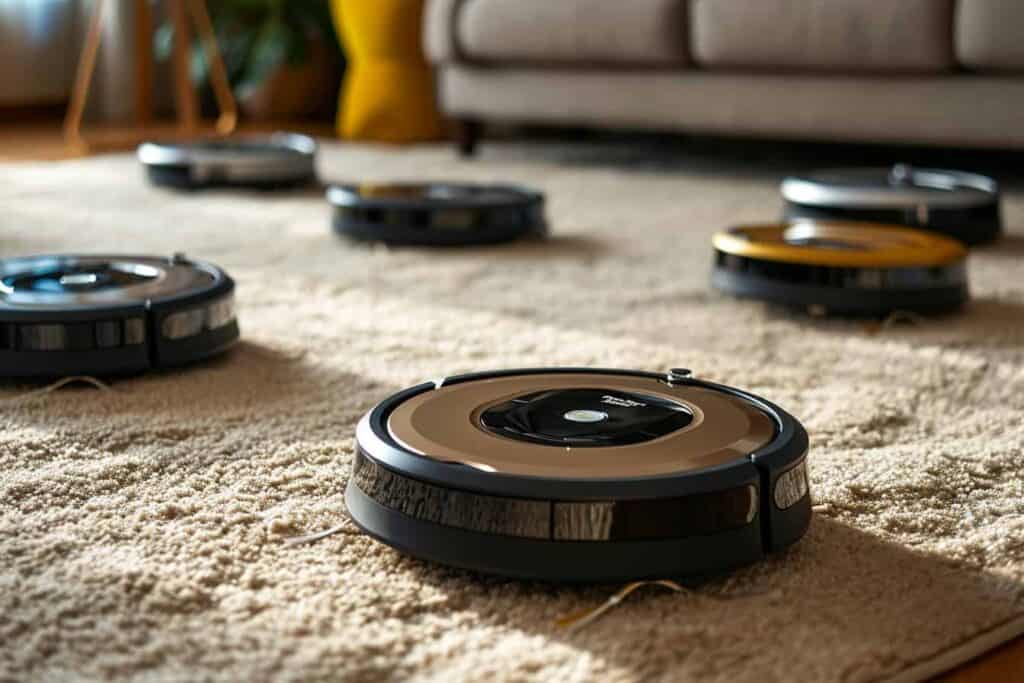
A repeatable lab setup gives you trustworthy lab-tested performance comparisons across low, medium, and high‑pile carpets.
Test setup and debris mixes:
- Consumer Reports medium-pile mix: 20 grams cereal, 30 grams rice, and 20 grams yellow peas (70 grams total) spread evenly across a 4×5 foot area and photographed before and after.
- Wirecutter-style variations for low, medium, and high pile using rice, Cheerios, and cat litter to show particle-size effects on pickup.
- CNET-style fine-sand subtest to compare sand behavior on hardwood and midpile surfaces.
- Record exact grams placed, start and end debris-tray weights, and standardized before/after photos for verification.
Grams-captured metrics and time windows:
- Single-pass pickup measured in absolute grams recovered.
- Two-pass pickup measured in absolute grams recovered.
- Fixed 10-minute continuous run measured in absolute grams recovered.
- Percent recovery of the known deposit and pickup rate in grams per minute are calculated for each run. You can compare models directly by grams per minute and percent recovery to make pile-height tradeoffs clear.
Obstacle, climb, and brush-engagement tests:
- Transition climbs onto high-pile rugs at 1/2 inch and 3/4 inch to log clears, stalls, and failed attempts.
- Stalled-brush events and repeated clearance attempts are recorded as discrete failure modes.
- Pet-hair tangle subtest using long synthetic hair to evaluate how brush geometry and suction interact.
Noise and coverage metrics:
- Measure A-weighted equivalent continuous sound level (LAeq) at 1 meter and 3 meters on carpet to compare perceived loudness.
- Produce heat-map coverage and cleaning-density visuals that show overlap, missed spots, and navigation efficiency across pile heights.
We normalize suction power claims against measured pickup using this testing methodology:
- List manufacturer claims in Pascals and vendor multipliers alongside measured pickup for direct comparison.
- Compute pickup-per-Pascal (grams/Pascal) and pickup-per-watt ratios plus percent of claimed advantage realized.
- Compare models such as Roomba 980 and Roborock S8 MaxV Ultra and highlight when brush design or roller type outperforms raw suction power in deep‑pile and pet‑hair results.
How Do You Choose and Maintain a Roomba for Your Carpet?
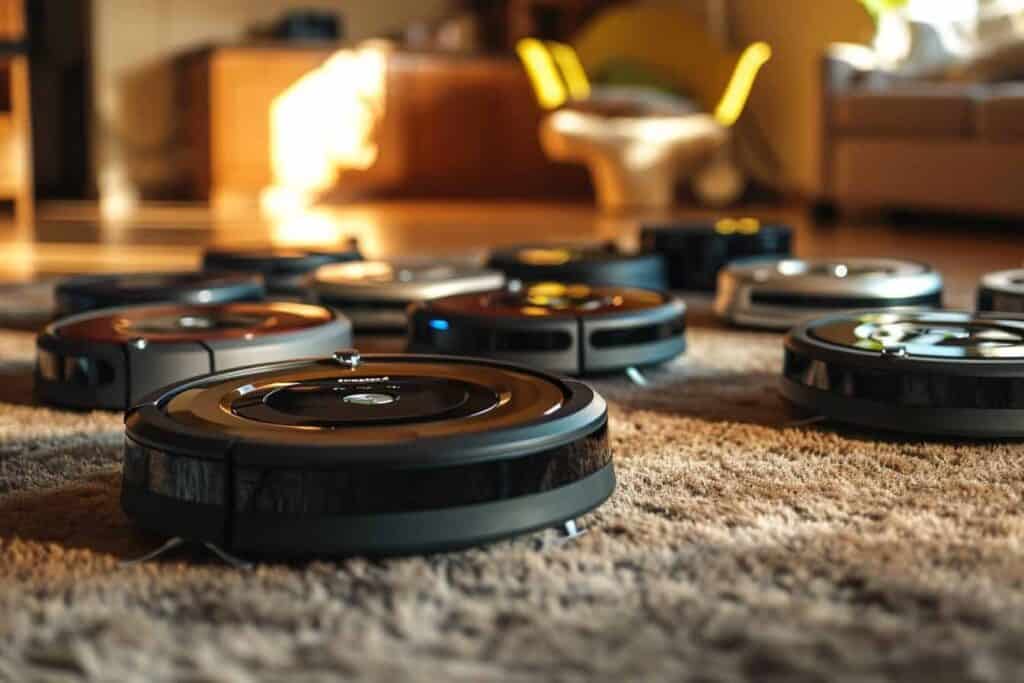
Match your Roomba to pile height and shedding so carpets stay clean with minimal upkeep.
This buying guidance breaks choices into three quick picks by carpet profile:
- High pile + heavy shedding: a high‑suction, dual‑rubber roller model such as j9+ or s9 variants for best hair pickup and fewer tangles.
- Medium pile + light-to-moderate shedding: a midrange brush‑plus‑suction model like i3, i4, or Max 705 for balanced performance and value.
- Low pile + low shedding: a compact or budget unit such as the 205 DustCompactor Combo for basic maintenance.
Brush design and suction determine carpet performance and tangle rates:
- Rubber dual rollers lift embedded pet hair and fibers more effectively than suction‑only heads.
- Dual‑roller systems cut tangling around axles and bristles.
- Prioritize models that pair strong suction with rubber rollers when floors see frequent shedding.
Auto‑empty docks reduce hands‑on work but add tradeoffs and costs:
- Without a dock expect full bins every 1–3 cleaning cycles in heavy‑hair homes.
- With an AutoEmpty dock expect manual emptying roughly once every 1–3 weeks depending on home size and shedding.
- Downsides include added cost ($200–$400), larger footprint, emptying noise, and replacement bags every ~60–90 days with heavy use.
Practical maintenance cadence to keep carpets performing well:
- Run schedule: daily or every‑other‑day for heavy shedders; 2–3× weekly for moderate homes.
- Weekly: clear the main brushroll, check the side brush, and empty the bin.
- Monthly: clean the primary filter and wipe sensors.
- Replacement intervals: filters every 2 months heavy / 3 months light; brushrolls and side brushes every 6–12 months or on visible wear.
- PCMag‑tested runtimes help plan zones for models such as j9+, i3+ EVO, and 205.
Tune settings and in‑app routines for better carpet results:
- Enable Carpet Boost or max suction in carpeted rooms.
- Schedule multi‑pass runs for high‑pile or high‑traffic zones.
- Use keep‑out lines for fringed rugs and loose‑pile edges.
- Run deep‑clean passes 2–3× weekly and maintenance passes daily or every other day.
- Pair robot work with a manual upright deep clean 1–2× per year.
Budget consumables and weigh support risks before buying:
- Consumable costs: filters $10–20, brushrolls $20–40, AutoEmpty bags $10–30 per pack.
- Consider long‑term support and app or dock reliability concerns flagged by Wirecutter when factoring total cost of ownership.
- Decision checklist:
- Assess pile height.
- Rate pet shedding level.
- Choose desired emptying cadence.
- Set your dock budget.
- Confirm battery/runtime needs.
Follow the checklist and maintenance cadence to choose the right Roomba or consider the Roborock S8 MaxV Ultra as an alternative.
Best Roombas For Carpet FAQs
Shopping for a Roomba for carpet brings predictable questions about suction, brush design, self-emptying docks, and upkeep. The FAQs explain what you should check and how testing methodology affects real‑world carpet performance.
1. How does carpet type affect Roomba battery life?
Dense, high‑pile carpet creates extra resistance and a climbing load on the wheels and brushroll.
That forces motors to work harder and shortens your Roomba’s battery life compared with hard floors or low‑pile rugs.
Models with Carpet Boost raise suction when sensors detect carpet, which improves pickup but increases power draw.
Expect roughly a 10-30% reduction in usable runtime depending on battery capacity and how often boost runs, so prioritize higher‑suction models like the j/Max or s‑series when deeper carpet cleaning matters.
2. Which Roomba brushrolls work best on high pile?
Dual rubber multi-surface rollers work best on high-pile carpet.
A textured agitator loosens fibers while the opposing rubber roller pulls loosened debris into the suction path, which reduces hair wrap compared with bristled brushes.
Rubber brushes seal to long pile so suction and the rollers lift embedded dirt instead of scattering it.
Prioritize models that pair dual-roller brushes with stronger suction for daily maintenance, and still schedule periodic deep cleans with an upright vacuum.
3. Can Roombas reduce carpet allergens effectively?
Yes. Roombas can meaningfully lower surface allergens between full cleans. They are not a substitute for periodic deep cleaning with an upright or canister vacuum.
Consider these tradeoffs and priorities:
- Suction, Roombas remove loose hair and dander but often miss embedded grit compared with uprights.
- Filters, choose HEPA-style filters and a sealed dirt path to trap fine particles.
- Pet features, if you have pets prioritize strong suction, dual rubber brushrolls, and a self-emptying base to reduce tangles and upkeep.
Use a Roomba for regular maintenance and an upright or canister vacuum for scheduled deep cleans.
4. How loud are top Roombas when vacuuming carpet?
Expect these measured ranges on carpet:
- Quiet modes: ~55–62 dB
- Normal/power modes: ~63–68 dB
- Full turbo / carpet-boost (examples: S9+, J9+): ~69–75 dB depending on carpet pile and room acoustics
The Equivalent continuous A-weighted sound level (LAeq) averages energy over a cleaning cycle, so a single carpet-boost peak raises LAeq and makes the run sound louder to you. You will perceive a 3–6 dB LAeq rise as noticeably louder because carpet boost boosts mid and high frequencies and adds a sustained tone.
Higher suction, as seen in the S9+ and J9+, helps deep‑pile cleaning. Vendor figures like 7,000–12,000 Pa or bold multiplier claims do not reliably predict noise or real-world performance and should be verified with independent lab tests.
5. Will mopping Roomba models damage carpeted edges?
Many hybrid Roomba and combo models use automatic mop lifting that senses carpet and raises or retracts the pad to avoid wetting rugs and carpeted edges. Flagship hybrids with an AutoWash Dock also wash and dry the mop between runs, which reduces the chance a damp pad redeposits moisture on edges.
If you have carpets, follow these precautions:
- Turn off mopping for carpeted rooms in the app.
- Use no-mop boundary strips or virtual walls.
- Avoid budget combos like the Roomba 205 DustCompactor Combo ($470 MSRP, often on sale near $270) unless the app lets you disable mopping by room.
When unsure, disable mopping for carpeted areas or choose a hybrid explicitly marketed with carpet-lift and a drying base to prevent edge wetting.
Check out these other articles for more on robot vacuums: